Deck repair or replacement? Start with what the structure is telling you.
Worn boards do not always mean the entire deck must go. But a fresh surface cannot correct weak framing, failing connections, unsafe stairs, or a layout that no longer works. The right decision begins with a careful inspection.
McKenzie Construction & Management · October 22, 2026
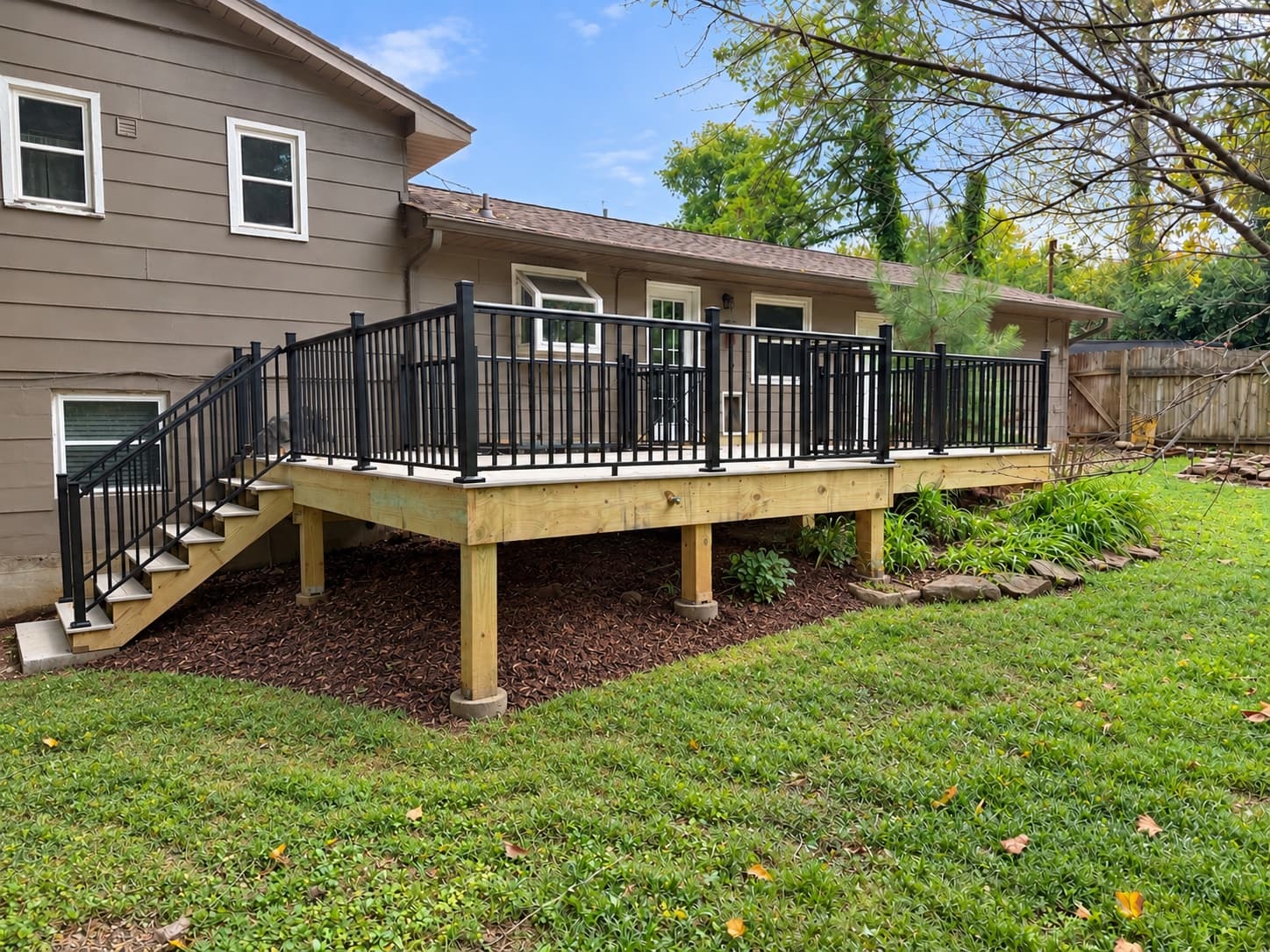
Repair the parts that failed—or rebuild the system?
A deck is a connected structure. Surface boards, joists, beams, posts, footings, the house connection, stairs, and guardrails all have to work together. Replacing only the most visible material can be reasonable when the structure below is sound. It can also conceal problems when the supporting system has reached the end of its useful life.
Before pricing a cosmetic refresh, look for soft or split framing, corrosion, loose fasteners, movement, water damage near the house, uneven footings, and stairs or railings that no longer feel secure. A qualified contractor can help determine what is reusable and what should be replaced.
A real project example
Simplifying a two-level deck in Tellico Village
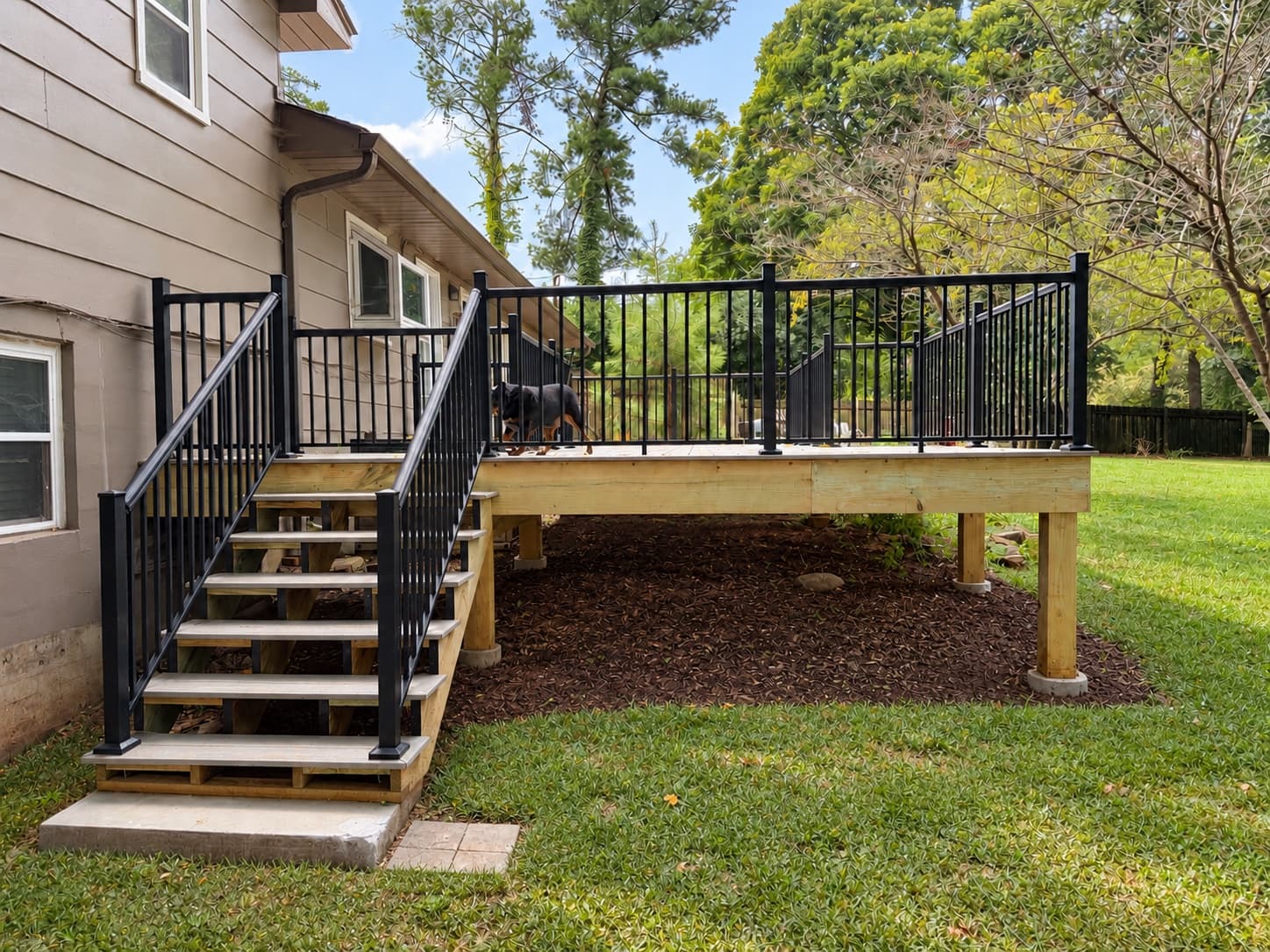
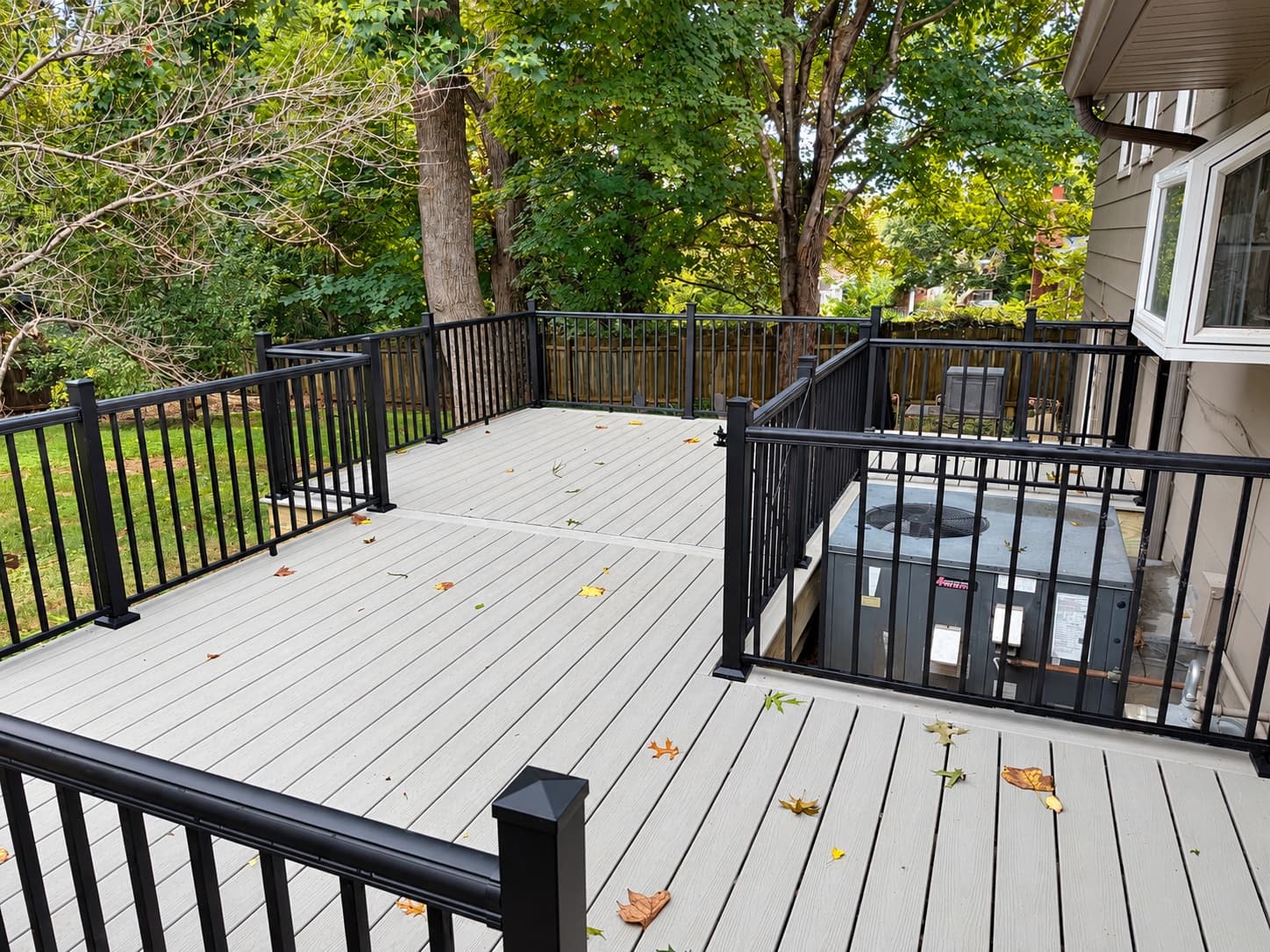
For this Tellico Village project, the old deck was removed, the layout was adjusted, and the two-level arrangement was rebuilt as one connected deck surface. The finished project uses Trex composite decking with powder-coated aluminum railings and a coordinated stair run.
The important improvement was not simply a change in material. Moving to one level created a clearer path across the deck and a more usable relationship between the house, stairs, and yard.
Signs a focused repair may be reasonable
- Wear is limited to deck boards, trim, or a small number of replaceable components.
- Joists, beams, posts, footings, and the house connection are sound and appropriately configured.
- The existing size, elevation, stair location, and traffic flow still work for the household.
- New decking and railing can be installed without creating compatibility or clearance problems.
Signs a complete rebuild deserves serious consideration
- Multiple structural members show rot, splitting, insect damage, or prolonged moisture exposure.
- The deck moves, settles, or feels unstable under normal use.
- Stairs, guardrails, flashing, or connections require broad correction rather than an isolated repair.
- The existing layout wastes space or creates awkward access between the home, deck, and yard.
What changes the scope and cost of the project?
The largest variables are the amount of reusable framing, deck size and height, site access, demolition and disposal, stair and railing complexity, material selection, drainage, and any code or permit corrections discovered during the work. A useful estimate separates known work from conditions that can only be confirmed after removal.
Common questions
Can deck boards be replaced without replacing the framing?
Sometimes. The framing should be properly sized, securely connected, structurally sound, and compatible with the new surface. Removal of the old boards often reveals conditions that were not visible from above.
Does composite decking eliminate maintenance?
It reduces routine surface maintenance, but the finished deck still needs cleaning and periodic inspection of its railings, fasteners, flashing, framing, and connections.
Should the deck layout change during a rebuild?
It is worth evaluating. A rebuild is an opportunity to improve traffic flow, stair placement, usable floor area, and how the deck connects the home to the yard.